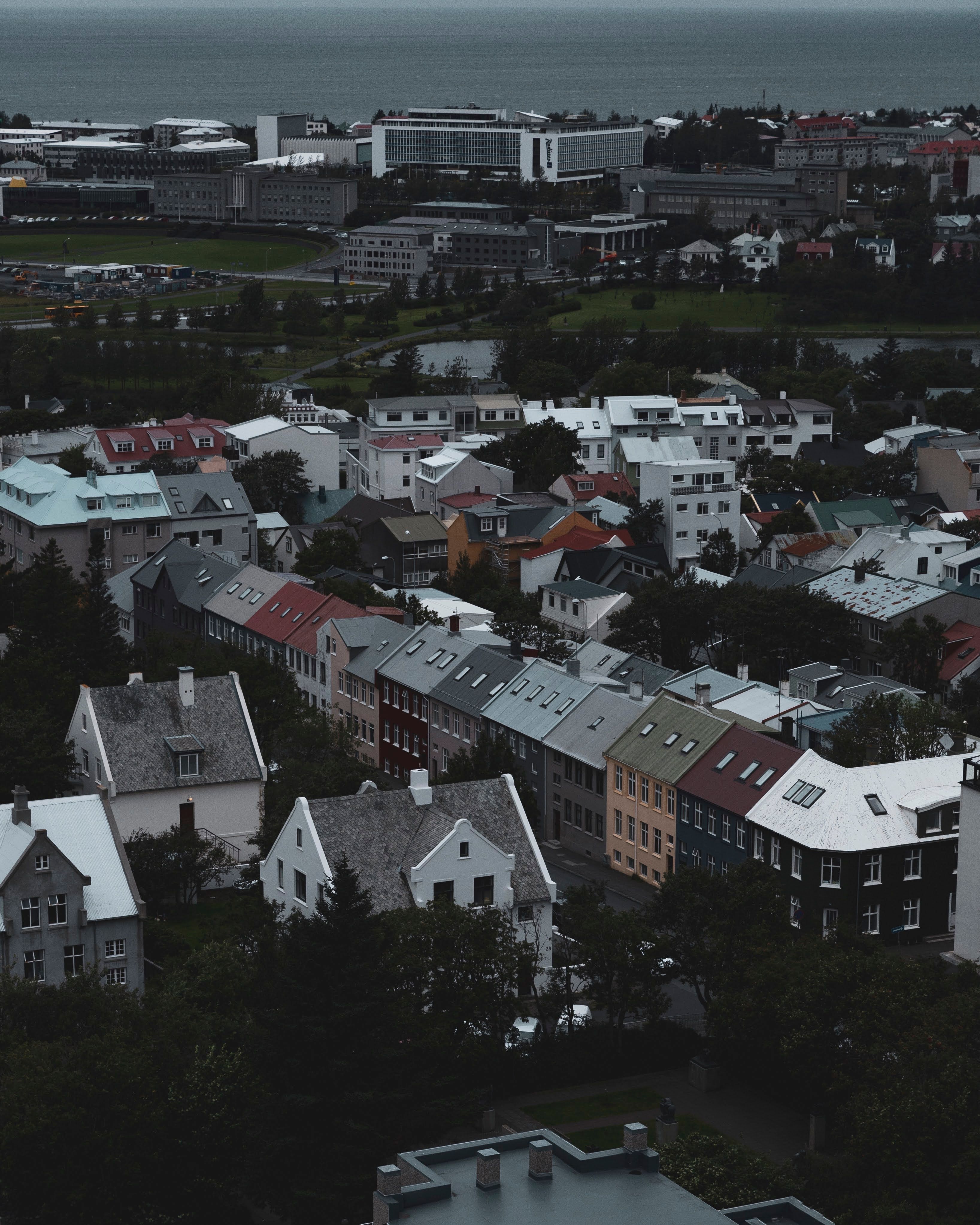
Seen from above, Reykjavík appears suspended between two states. Rows of closely gathered houses stretch toward a dark and seemingly endless sea. Their roofs—in shades of silver, rust red, muted green, and charcoal—catch the light filtering through the clouds. The city is awake but never hurried; full of life, yet profoundly private.
There is something cinematic in this northern stillness. The landscape does not seek attention through excess. Instead, it draws us closer through subtle contrasts: orderly streets set against an open horizon, small living spaces beneath an infinite sky, and the warmth imagined behind windows against the cool, untamed air outside.
This city reminds us that comfort can be an atmosphere in itself.
In places shaped by long evenings and unpredictable weather, the home becomes more than a backdrop. It transforms into a refuge, a ritual, and a world of its own. Simple acts—drawing the curtains, changing into something soft, and allowing the day to slowly recede—take on new meaning. Rest is not an interruption to life; it is part of its natural rhythm.
The same philosophy lives at the heart of Dagdroøm.
Dagdroøm designs for the hours when the outside world begins to fade and the most natural version of the self emerges. Its pieces accompany slow mornings, quiet afternoons, and evenings free from urgency. They belong to moments when dressing is guided not by expectation, but by feeling. Soft silhouettes, distinctive patterns, and fluid fabrics transform loungewear into a personal experience—clothing created not merely to be seen, but to be truly lived in.
The Reykjavík skyline reflects this balance perfectly. Its architecture is functional without feeling cold, restrained without losing its character. Unexpected colors emerge among the grey façades and pale rooftops: a red roof, a wall in warm earthy tones, or a deep green surface. These quiet interventions echo Dagdroøm’s approach: comfort at the foundation, character in the details.
Beyond the houses, the sea traces the edge of the image like a second sky. It evokes distance, imagination, and the possibility of being somewhere else. Yet the city below feels grounded and intimate. This tension—between escape and belonging, dreaming and remaining—is where Dagdroøm finds its own language.
Daydreaming does not always mean leaving where we are. Sometimes, it means becoming more present: noticing the texture of fabric against the skin, the shifting light in a familiar room, or the silence that arrives before nightfall.
Reykjavík invites us into precisely this state of mind. It asks us to turn inward without disconnecting from the world—to discover beauty in simplicity, warmth in solitude, and freedom in stillness.
Perhaps this is the essence of Dagdroøm: creating a room for the imagination, wherever you may be.